Aphrodisias Museum of Turkey
Located in the ancient city of Geyre within Aydın. It showcases artifacts, coins, and sculptures discovered during excavations at Aphrodisias.
.webp "Aphrodisias Museum of Turkey")
Located in the ancient city of Geyre within Aydın. It showcases artifacts, coins, and sculptures discovered during excavations at Aphrodisias.
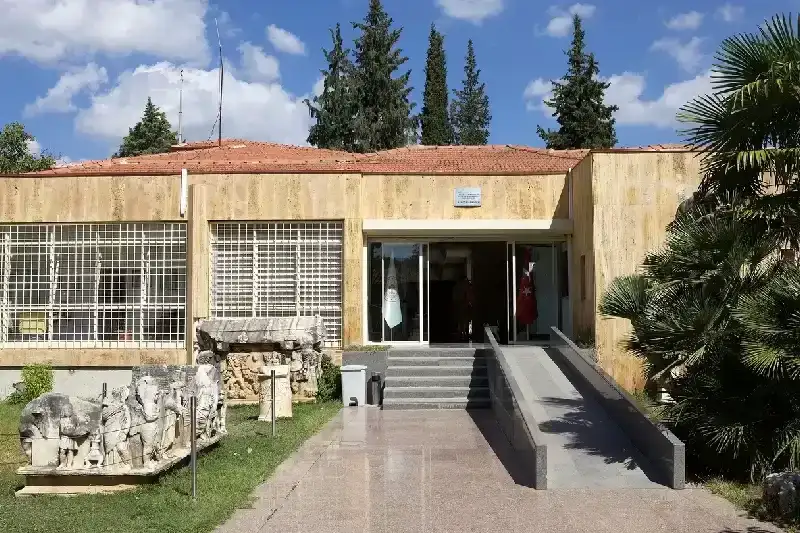
Aphrodisias Museum is situated in the ancient city of Geyre in Aydin province. The museum exhibits a collection of artifacts, coins, and sculptures unearthed during excavations carried out at the ancient city of Aphrodisias.
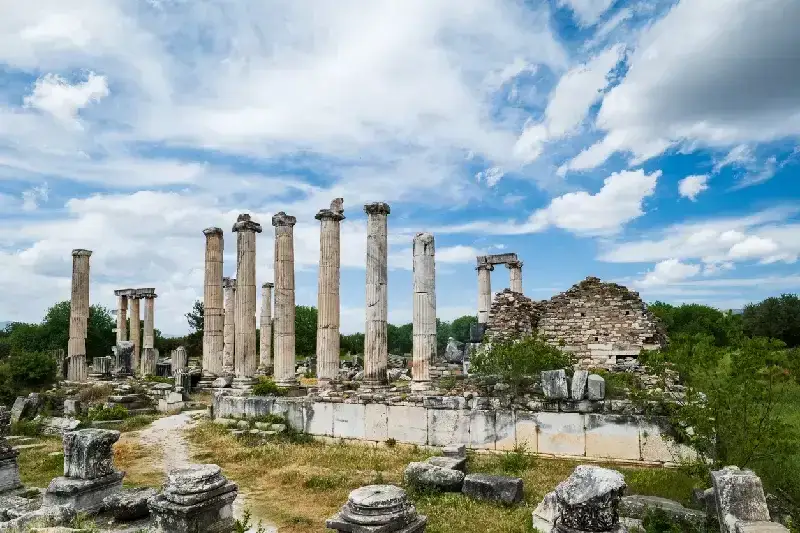
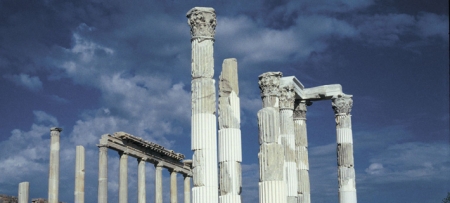
The site of Aphrodisias has been sacred since the 7th millennium BC, when Neolithic farmers came here to worship the Mother Goddess of fertility and crops. In Greek times, the location was dedicated to Aphrodite, the goddess of affection and fertility. The location was named Aphrodisias during the 2nd century BC, and therefore the great Temple of Aphrodite was built in the first century BC.
The cult of Aphrodite at Aphrodisias was different and specific, following the goddess' ancient origins and commonalities with other Anatolian gods (such as Artemis of Ephesus) while also taking in familiar Greco-Roman themes that made her universal.
For centuries Aphrodisias consisted of just the shrine, but when the Romans defeated the Pontic ruler Mithridates in 74 BC, Aphrodisias was rewarded for its loyalty and began to prosper. Sulla and public leaders were believers of Venus and favored her city, and also the emperor Augustus awarded it the high opportunities of autonomy and tax-free status.
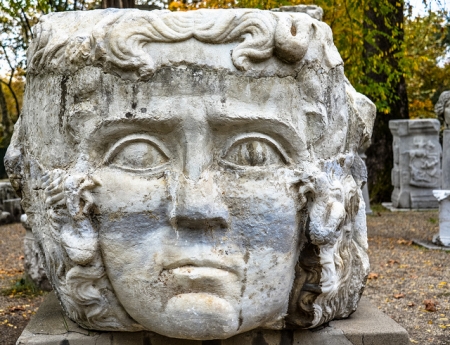
Thereafter it became a cultural and artistic hub known for its exquisite marble sculptures made of quarries of lovely white and blue-gray marble that lay a couple of miles east of town. Sculptures produced in Aphrodisias were exported as far as the geographic area and Rome. Aphrodisias remained a pagan center long after the introduction of Christianity to the world, but it had been eventually renamed Stavropolis ("city of the cross") than Caria after the historical region.
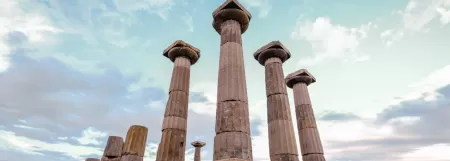
During the Byzantine era, Aphrodisias/ Stavropolis became the seat of the metropolitan bishop of Caria, and therefore the Temple of Aphrodite was a Christian basilica. It had been a serious undertaking, unique among all temple-to-church conversions. Walls and columns were destroyed and reused to expand and modify the building. The columns of the front and back of the temple were wont to extend the side colonnades, creating two long rows of 19 columns each.
The cellar of the temple was also dismantled, with its stone reused within the construction of recent walls on all sides. The church was renovated within the middle Byzantine era and stood for hundreds of years until it was destroyed, possibly within the Seljuk raids of the late 12th century. The town faded into obscurity and today is an element of the Turkish village of Geyre. As part of Turkey Tours, Aphrodisias offers travelers a glimpse into ancient artistry, religious transformation, and architectural grandeur.
Get in touch with our local experts for an unforgettable journey.
Plan Your Trip
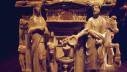
The Aphrodisias Museum displays a number of the city's famous marble sculptures. It also includes the cult statue of Aphrodite that stood within the temple, which is exclusive and interesting. Excavators of Aphrodisias describe the statue as follows: the Aphrodisian goddess stands during a stiff frontal pose, along with her upper arms pressed near her body and her hands extended forward.
Her most distinctive attribute is her heavy overgarment (known as an ependytes), which conceals most of her body. The front of this garment is split into horizontal zones, each of which is full of complex figural reliefs. It's this series of reliefs that distinguishes the Aphrodisian goddess and shows her individual significance. Each motif symbolizes a part of the goddess's divine identity and mythological sphere of power; they include the three Graces, Selene, Helios, erotes, and Aphrodite herself, depicted not in her distinctive local guise but during a more traditional Hellenistic mode of presentation: half-nude and seated on a sea goat, accompanied by a dolphin and a triton. Today, it stands as one of the most fascinating Turkey attractions, drawing visitors eager to explore its well-preserved ruins.
One of the museum's notable exhibits is the Melpomene Room in the museum featuring statues that symbolize Melpomene, tragic muse, and Apollo, art and music god. The room illustrates the role played by theatre arts in the life of Aphrodisias.
The other giant part is the Odeon Hall, in which there are statues of lying poets and sportsmen that supply data regarding cultural and sports events of the antique inhabitants. Also on display here are unfinished statues, revealing information on the craft and steps in ancient sculptor procedures.
There are also presented in the museum a series of busts portraying some of the greatest ancient philosophers and statesmen, testifying to the city's intellectual grandeur at its heyday. Additionally, there are reliefs from the tomb of Zoilos, a famous patron of Aphrodisias, which portray the artistic height that was attained under the Augustan era. For those interested in learning about the daily life of Aphrodisians, the museum has exhibitions of artifacts across various periods, including coins, ceramics, and tools, that present a whole picture of the city's chronological history during your journey.
The Aphrodisias Museum is situated in the ancient city of Aphrodisias, near the modern village of Geyre in Turkey’s Aydın Province. It houses artifacts excavated from the site, showcasing the city's rich artistic and cultural history.
The Aphrodisias Museum displays an impressive collection of marble sculptures, including statues of gods, emperors, and philosophers. Visitors can also explore intricately carved relief panels from the Sebasteion, showcasing the fusion of Roman and local artistic traditions.
Yes! The Aphrodisias Museum offers a unique opportunity to experience one of Turkey's most important archaeological sites up close. Its well-preserved statues, inscriptions, and architectural fragments make it a must-visit for history and art enthusiasts alike.
The Pergamon Asclepieion in Turkey was an ancient healing center, famous for its sacred springs and Roman medical treatments. Explore its historic ruins.
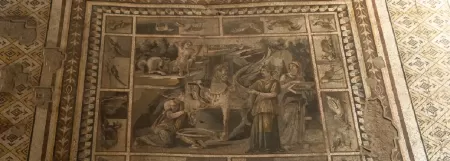
Hatay Archaeology Museum in Antakya houses Turkey’s largest Roman mosaic collection, along with artifacts from ancient civilizations.
Aphrodisias Museum in Turkey houses breathtaking ancient sculptures, Roman reliefs, and artifacts from the renowned city of Aphrodite.
Antalya Archaeological Museum showcases artifacts from Perge, Aspendos, and Termessos, featuring ancient sculptures, mosaics, and relics.
No visit to Sagalassos would be complete without a stop at the Archaeological Museum in Burdur. This museum, located just a short drive from the site, houses major discoveries from Sagalassos.
Located in one of the foremost valuable areas of the Aegean Region, Denizli Hierapolis Archeology Museum belongs to a part that has been continuously inhabited since antiquity.
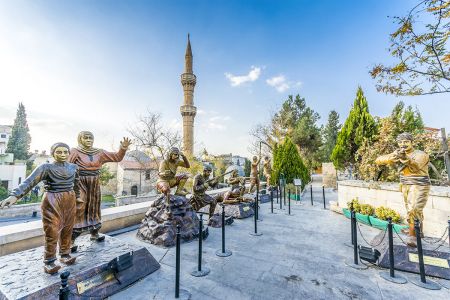
Embark on a unique Cultural and Heritage tour at Haci Bektas Veli Museum, we’ll uncover the illuminating Sufi heritage that shapes Turkey’s land and history.
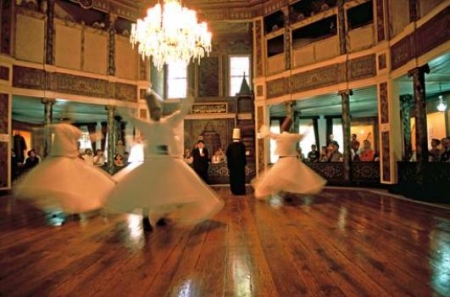
Explore the Galata Mawlawi House Museum, a key site in Istanbul highlighting Sufi mysticism and the Whirling Dervishes' unique history.
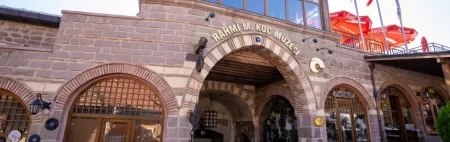
Step into the Rahmi M. Koç Museum in Istanbul, where industrial heritage comes to life with historic vehicles, ships, and interactive exhibits.
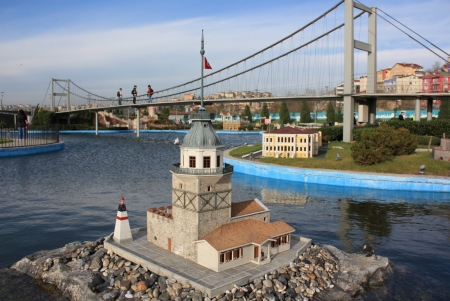
How about taking a fast tour through Turkey's major cities and sightseeing their landmarks? Located in Istanbul, Miniatürk is the world’s largest open air miniature museum
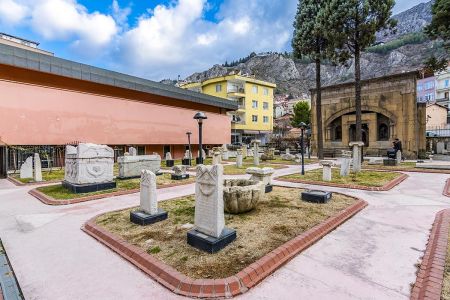
Explore Amasya Archaeological Museum, home to ancient artifacts and rare mummies from the Ilkhanid era.
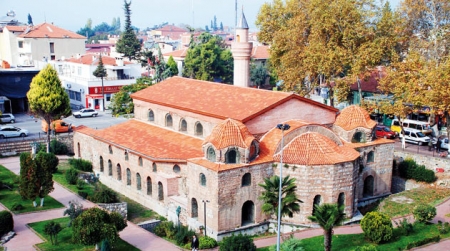
Discover Iznik Ayasofya, a historic Byzantine church-turned-mosque in Turkey, where the First Council of Nicaea once took place.
Explore Alacahoyuk Historic Site, an ancient Hittite city in Çorum with ruins, sphinx gates, and royal tombs and visit Alacahoyuk Museum to see remarkable artifacts.
Visit the Istanbul Military Museum to explore Ottoman weapons, war relics, and live Mehter Band performances in a historic setting!
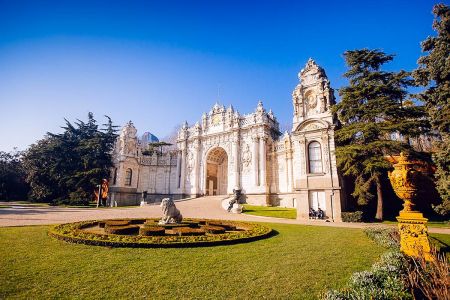
Step into Ottoman history at Yıldız Palace Museum, Istanbul’s royal complex with elegant halls, historic artifacts, and lush imperial gardens.
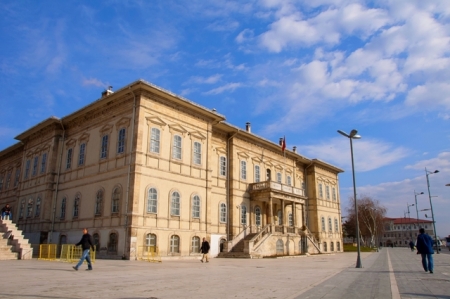
Visit Atatürk Congress & Ethnography Museum in Ankara, where Turkey’s National Struggle for Independence began in 1919. Explore its rich history!
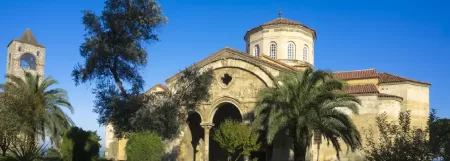
Trabzon Ayasofya Museum highlights Byzantine frescoes and rich history. Visit today to explore its stunning heritage and feel Trabzon vibes!
Established in Ankara, the capital of Turkey, the Museum of Anatolian Civilizations was awarded the Museum of the Year in 1997 by being chosen from among 68 museums.
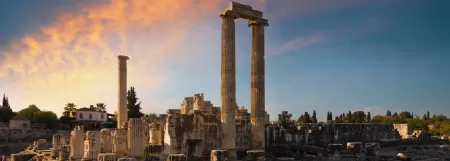
Uncover Didim, located in Aydın province, home to the ancient sanctuary of Didyma, known for the Temple and Oracle of Apollo, one of the most significant Hellenic ruins.
Visit Miletus Museum in Turkey and explore the ruins of an ancient Greek city once famed for trade, philosophy, and grand architecture!
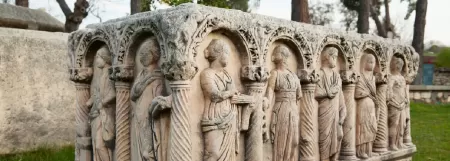
Assos Historic Site built in the 6th century BC in Çanakkale province, Assos was renowned in antiquity for its sarcophagi. Visit Assos and step into history!
Step into history at Troy, home of the legendary Trojan Horse! Uncover ancient ruins, city walls, and myths from Homer’s Iliad in Canakkale, Turkey.
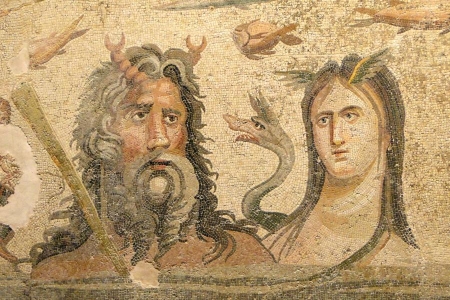
Zeugma Mosaic Museum, a treasure of ancient Roman art in Gaziantep, showcases stunning mosaics like the iconic Gypsy Girl and other breathtaking artworks.
Explore the Bodrum Museum of Underwater Archaeology, home to incredible shipwrecks, ancient artifacts, and maritime history in Turkey.
Discover the ancient Mausoleum at Halicarnassus, a masterpiece of architecture and one of the Seven Wonders.
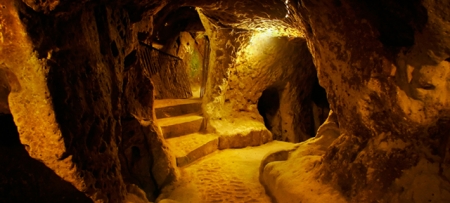
Discover the secrets of Derinkuyu Underground City in Cappadocia, a multi-level ancient wonder with tunnels, ventilation shafts, and hidden rooms.
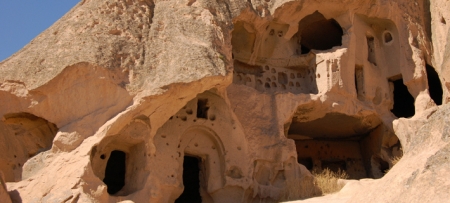
Situated in Nevsehir province, Zelve houses the most number of the world-famous Fairy Chimneys. Zelve is an important Christian center since it is the place
Dating back to the 3rd century BC, the Acropolis in Izmir province has preserved many of its structures and works of art. Built on several levels of mounds, the ancient site of Pergamon Acropolis is extraordinarily rich
This museum in Izmir province houses the archeological finds from the site where one of the most sophisticated civilizations once thrived.
Among the best things to do in Istanbul visiting the Church, Mosque, and Museum Hagia Sophia the major attraction, The 8th Wonders of the World" of Turkey with Memphis Tours.
Built during the Ottoman era, the museum complex provided a background for the development of museology in Turkey. The buildings of the complex are themselves of historic significance.
This church is known to serve as the court chapel during religious ceremonies. This church carries the imprint of the typical Byzantine architecture.
The Great Palace Mosaic Museum harbors the mosaics excavated from the courtyard of the Great Palace built during the Byzantine period.
Built on a domineering point along the Bosphorus after the conquest of Istanbul, the palace is located on the tip of the historic peninsula.
The construction of this first Turkish museum started in the 19th century within the confines of the Suleimaniye Mosque Complex.
The museum was originally a Rose Garden in the Seljuk Palace and was later presented as a gift to Rumi’s father and made a Dervish Lodge.
Opened to public in 2002, the museum is located below the Hall of Honor in Ataturk’s Mausoleum. In addition to exhibition pieces, visitors can also peek into Ataturk’s Private Library.
Built in one of the oldest neighborhoods of Ankara called Namazgah, the Ethnography Museum was also Ataturk’s first resting place for 15 years before Anıtkabir (Mausoleum).
Unique in the world with its rich collection of more than 35,000 pieces, Hatay Archeology Museum hosts the priceless mosaics known to history.